
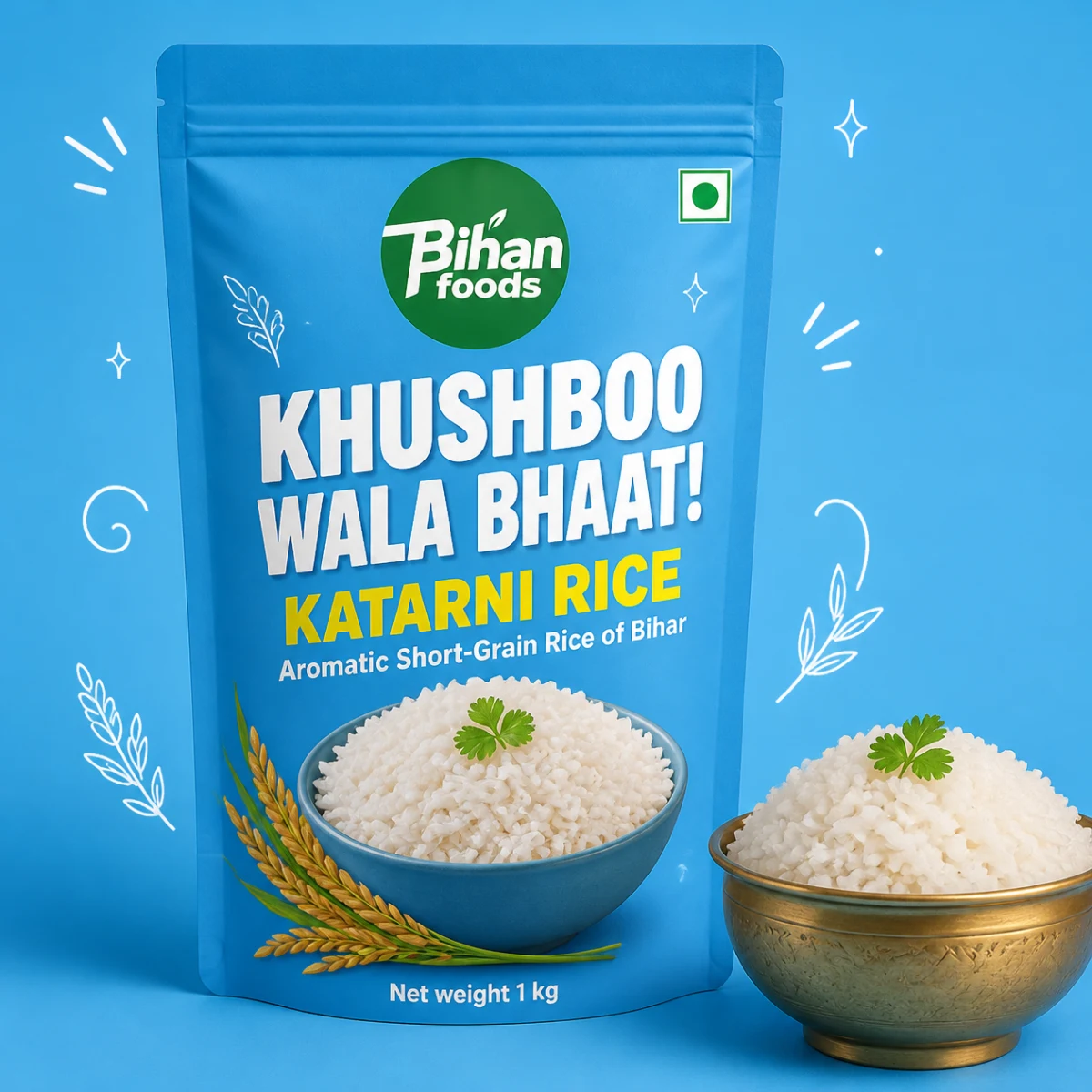
If Basmati is famous for length, Bhagalpur's Katarni is famous for perfume. Walk past a kitchen in Bhagalpur, Banka, or Munger when Katarni bhaat or fresh Dahi-Chura is on the table, and you recognize that warm, slightly floral scent before you even see the plate.
1. Why true Katarni grows only in a tiny belt
Katarni is a traditional short-grain, non-hybrid heirloom paddy grown along the Chandan river belt in Bhagalpur and Banka. Unlike high-yield hybrid rice that can be planted anywhere, Katarni loses its signature aroma when moved to different soil or heavy chemical fertilizer.
Farmers harvest it gently, age the paddy properly, and mill it slowly so the tiny pearly grains don't shatter. That rare combination of geography and skill earned Bhagalpur Katarni Rice & Chura its GI tag.
2. Katarni Chura: Makar Sankranti's finest bowl
Wait until winter arrives in Bihar and every household starts soaking Katarni Chura (flattened rice made directly from Katarni paddy). Unlike thick industrial poha that turns pasty or rubbery, real Katarni chura stays whisper-thin, light, and fragrant. Pair it with thick homemade dahi and fresh seasonal tilkut or jaggery, and you understand why people wait all year for January.
3. How to cook Katarni Rice without turning it mushy
- Rinse gently once or twice — don't scrub aggressively or you'll wash away the surface aroma.
- Soak for just 15 minutes before cooking in an open pot or pressure cooker with a 1 : 1.75 water ratio.
- Once cooked, fluff lightly with a fork and top with half a teaspoon of Bilona ghee. It needs nothing fancy — simple yellow dal and aloo chokha are enough.