
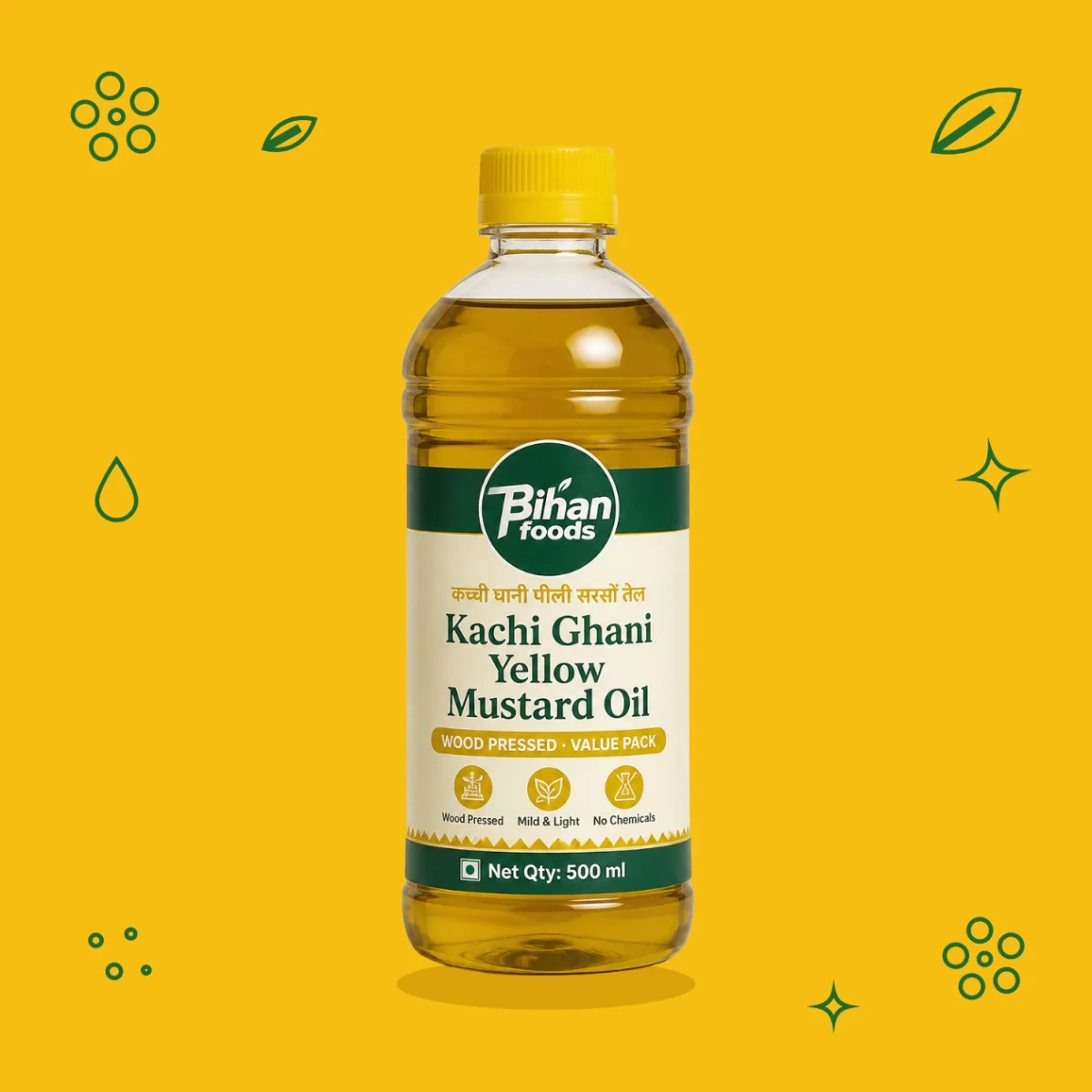
In a Bihari or Bengali kitchen, cooking oil isn't supposed to be invisible. When you pour real Kachi Ghani mustard oil into a warm kadhai, you expect that sharp, peppery jhaanjh rising gently from the pan — the natural sign that the mustard seeds weren't bleached, boiled with hexane, or deodorized.
1. What happens inside a cold wooden ghani
Industrial "mustard oil" is often extracted using high heat and chemical solvents, then refined until the natural pungency disappears (and sometimes artificially re-scented afterwards). In traditional wood-pressed Kachi Ghani extraction, clean sun-dried yellow or black mustard seeds are crushed slowly at temperatures below 45°C.
Because nothing is overheated, the oil keeps its natural antioxidants, Vitamin E, balanced omega fatty acids, and deep amber-gold colour.
2. Yellow vs. Black Mustard Oil — which one should you pick?
- Black Mustard Oil (Kala Sarson): Bold, pungent, and deeply aromatic. Best for litti-chokha, fish curry, bhindi, baingan bharta, and traditional Bihari pickles where that sharp punch preserves the achar naturally.
- Yellow Mustard Oil (Peela Sarson): Slightly milder, golden, and lighter on the nose — wonderful for everyday sabzis, parathas, tadka, and people who want pure Kachi Ghani nutrition with a gentler flavour.
"Never throw cold spices into cold mustard oil. Let the oil reach a faint wisp of smoke first (smoking point), lower the flame for 10 seconds, and then add your jeera or panch-phoran."