
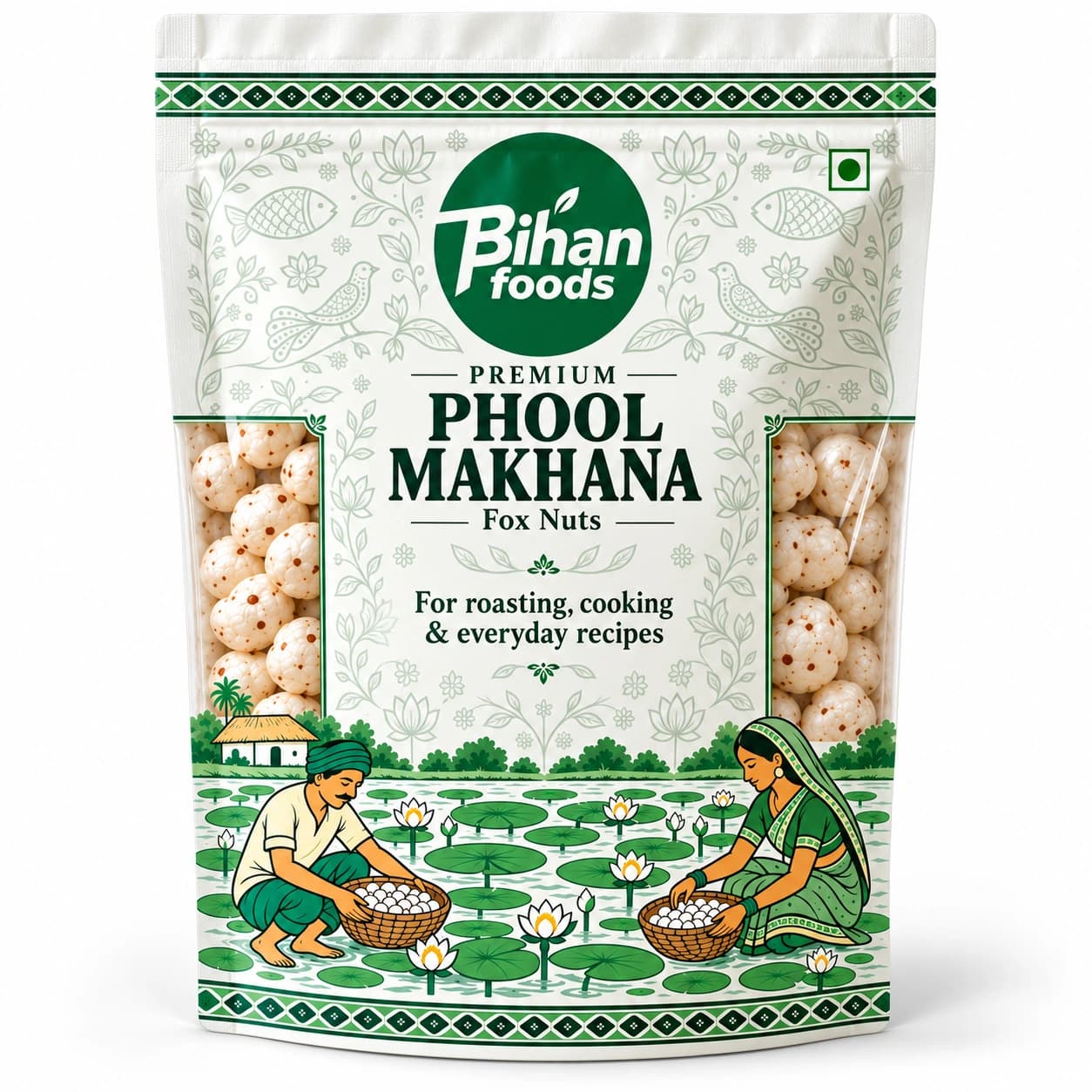
When you pick up a pouch of light, snowy-white makhana at a store, it is easy to forget where it actually began: dark, waist-deep pond water in Mithila before the sun has even cleared the bamboo groves.
1. The skill you cannot automate
Harvesting makhana is some of the hardest agricultural work in India. Traditional Mallah farming families know the exact week in late summer when the thorny lily pads sink and the heavy seeds settle into the pond mud. Farmers wade in with bamboo baskets (gaanja), scooping and washing the mud away under water by touch alone.
Once the seeds are washed clean, the real race begins in small rural workshops. Roasting the seeds in three separate temperature pans and popping each batch in seconds with a wooden hammer takes years of muscle memory — miss the rhythm, and half the batch turns flat.
2. Why direct sourcing matters
For decades, local farmers sold raw popped makhana through layers of middlemen at throwaway rates, while big city brands pocketed the margin and mixed smaller 3-suta or 4-suta grades with premium 6+ suta lots.
At Bihan Foods, working directly with farmer groups in Madhepura, Darbhanga, and Saharsa means fair pond-gate prices, strict hand-picked sieve grading (so 6+ HP truly means 6+ HP), and zero middleman dilution.
"When you choose GI-tagged Mithila Makhana, you aren't just choosing a cleaner snack for your family — you are helping a 2,000-year-old Mithila livelihood stay worth passing on to the next generation."