
Ask anyone from Bihar what they miss most during peak May heat outside the state, and nine times out of ten the answer isn't a sweet — it's a cold steel glass of street-side or home-whisked Sattu Sharbat.
1. Why sattu isn't just besan
People often confuse sattu with besan (chickpea flour), even though they behave completely differently in your kitchen and your stomach. Besan is made by grinding raw chana dal — you cannot drink it without cooking it first.
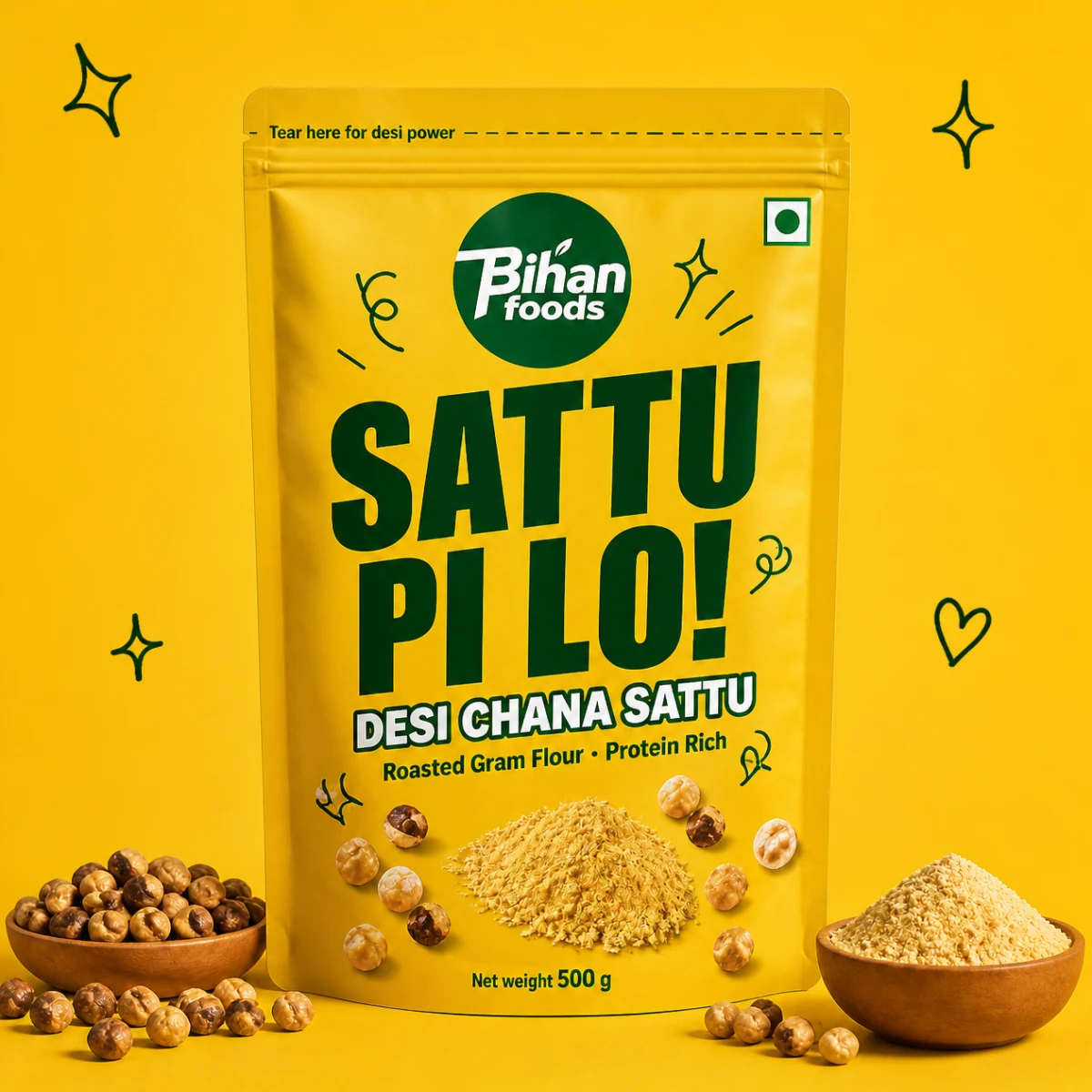
Desi Chana Sattu is made from whole Bengal gram that is first slow-roasted in hot sand or iron pans until the skin cracks and the grain turns nutty, and only then stone-ground on a low-RPM chakki. Because the gram is already roasted before milling, every scoop is ready to eat, naturally fragrant, and gentle on digestion.
2. Why it keeps you full till evening
With roughly 22–26g of plant protein and complex slow-release carbohydrates per 100g, a single glass of sattu at 11 AM stabilizes hunger in a way sugary cold drinks never can. Farm workers, students, and travelers across Bihar and eastern UP have relied on it for generations precisely because it cools the body while keeping energy steady.
"Skip the blender. Stir two heaped spoons of sattu with a splash of water into a smooth paste first, then top with chilled water — zero lumps, every single time."
3. Two 2-minute recipes from our home
- Classic Namkeen Sattu Sharbat: Mix 2 tbsp Chana Sattu (or Jeera Chana Sattu) with chilled water, ½ squeezed lemon, a pinch of black salt, finely chopped onion, green chilli, and fresh coriander leaves.
- Sweet Cooling Sattu (for kids & summer travel): Whisk 2 tbsp sattu with cold water or milk and a spoon of organic jaggery powder or mishri, plus a pinch of green cardamom.