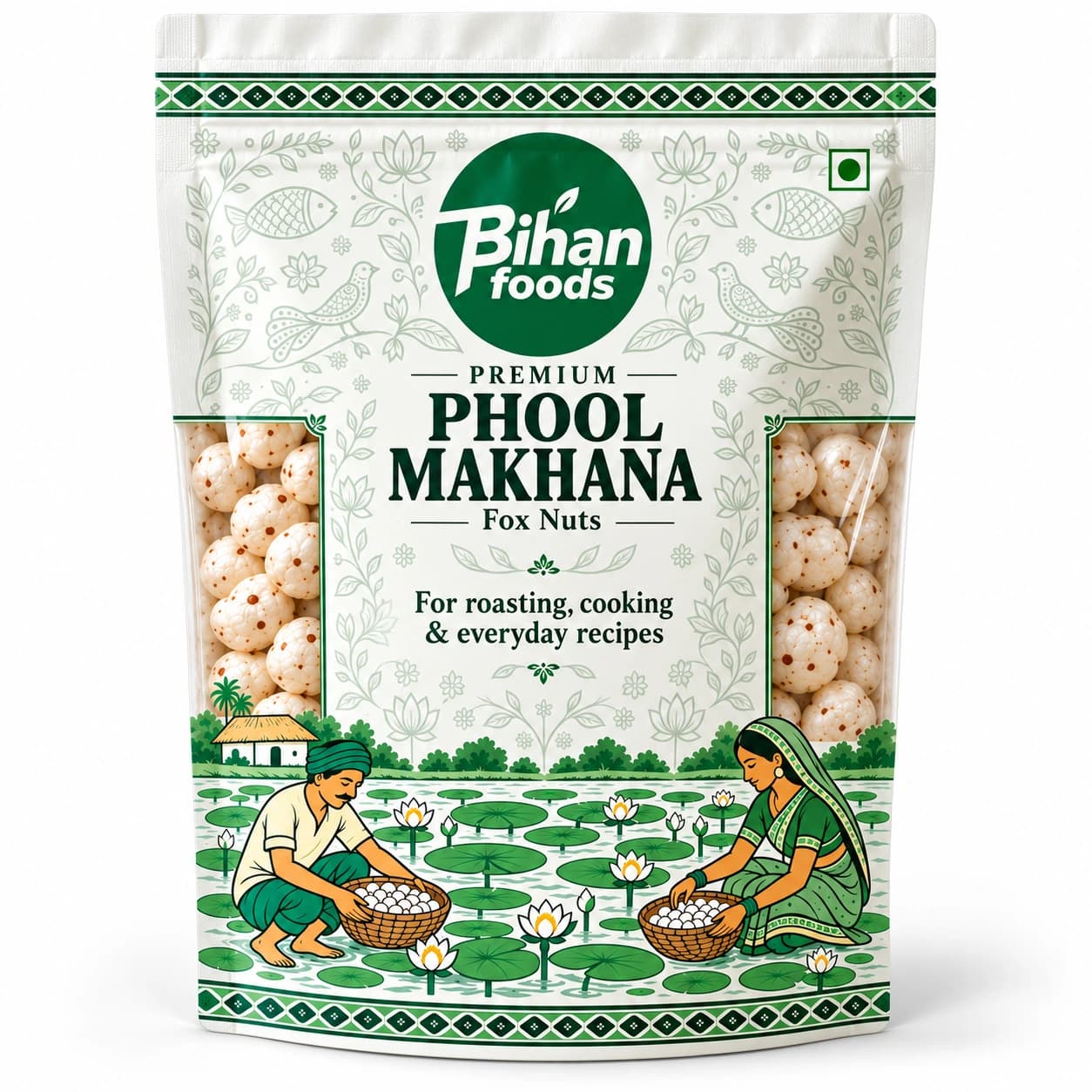

If you grew up anywhere between Darbhanga, Madhubani, and Madhepura, makhana was never a "superfood" with a fancy label on it. It was simply what came out of the tin dabba at 5 PM when everyone sat in the courtyard — crisp, warm, slightly smoky from the iron kadhai, and tossed with just enough desi ghee and sendha namak to leave a faint sheen on your fingertips.
1. Why Mithila Makhana tastes different from regular foxnuts
Most people outside Bihar don't realize that Euryale ferox — the prickly water lily that gives us makhana — is notoriously picky about where it grows. It needs shallow, still freshwater ponds (called mauns) with alluvial silt and humid monsoon warmth. That exact combination is why Mithila received the official Geographical Indication (GI) tag.
When you bite into true 6+ Suta or Jumbo Mithila makhana, it shouldn't feel chewy or hollow like styrofoam. A good kernel pops wide, feels airy yet substantial, and breaks with a clean snap.
"A simple test at home: press one raw makhana between your thumb and forefinger. If it dents like stale popcorn, it absorbed moisture. Good Mithila makhana stays crisp and dry even before roasting."
2. From pond mud to your evening bowl
Every single kernel has passed through human hands at least four times before it reaches a jar. After divers collect the dark, pea-sized seeds (guri) from the pond floor, the seeds are sun-dried, graded through bamboo sieves, slow-roasted in earthen or cast-iron pans over wood/husk fire, and then popped with a sharp tap of a wooden mallet (thapna) while still piping hot.
That split-second hand-popping is why no machine matches traditional Mithila popping — a fraction of a second too late and the seed chars; too early and it stays half-popped.
3. How we actually eat it at home
- The 5-minute kadhai roast: Warm 1 teaspoon of Bilona ghee on the lowest flame, add 2 cups of raw 6+ HP makhana, and stir patiently for 6–7 minutes until one kernel crushes cleanly into powder between your fingers. Turn off the heat before sprinkling salt, black pepper, or haldi.
- Makhana Kheer (without breaking the kernels): Roast the makhana first, lightly crush half of them, and simmer them in thickened milk with green cardamom for the last 10 minutes so some stay soft and some hold a gentle bite.
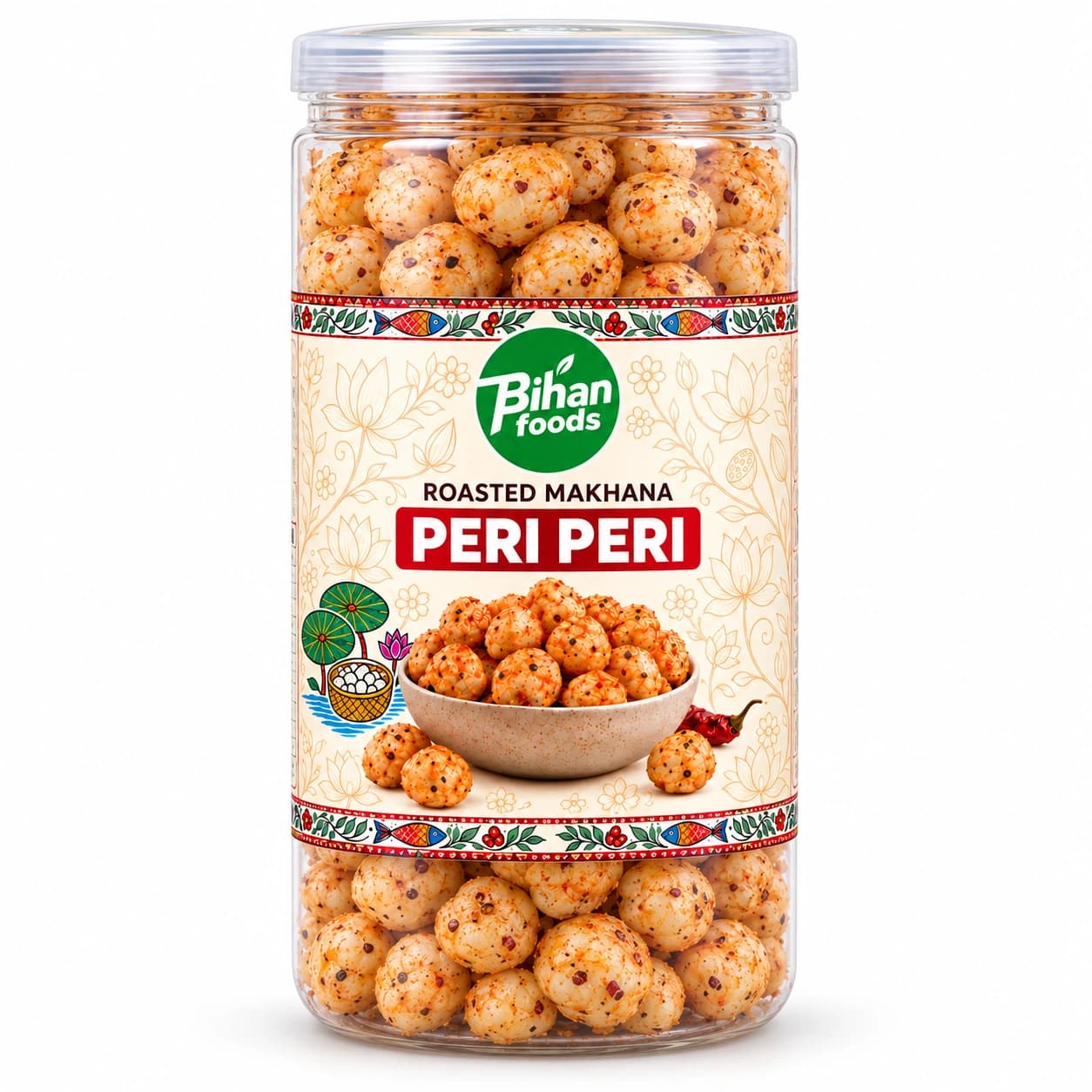
- On busy workdays: Keep a jar of Peri Peri, Pudina, or Cheese & Herbs roasted makhana on your desk — zero maida, zero palm oil, and far lighter than fried chips.