
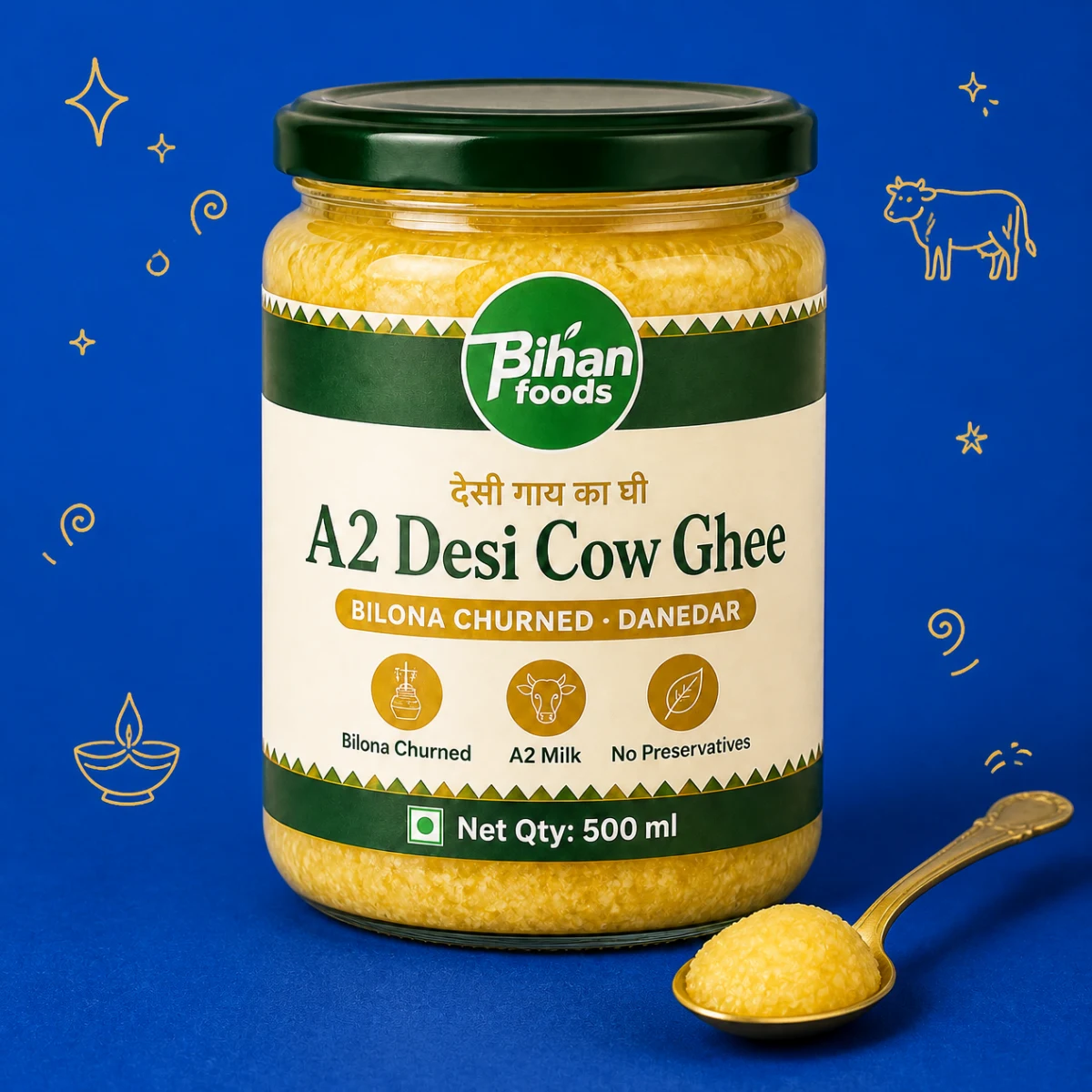
Open a jar of mass-market ghee in a supermarket and you'll notice two things right away: it looks dead flat, almost waxy, and it smells sharply sweet even before it hits a hot tawa. Now open a jar of small-batch Bilona ghee made from A2 cow curd, and the difference is obvious before you even taste it.
1. Cream vs. Curd: the whole secret is right here
Commercial dairies collect raw milk, run it through a high-speed centrifuge to skim off cream (malai), and boil that cream directly into butter oil. It is fast, cheap, and gives high yield — which is why commercial ghee costs half as much.
In the traditional Bilona method, we don't skim cream from raw milk at all. Instead:
- Whole A2 milk from grass-fed Gir and Desi cows is gently boiled in wide vessels and cooled down.
- A spoonful of yesterday's curd culture (jaman) sets the entire pot of milk into thick curd overnight.
- At dawn, a wooden churner (bilona) spins back and forth — clockwise, then anti-clockwise — to separate snowy white makkhan from buttermilk (chhaach).
- That butter is simmered slowly over a low flame until every drop of water evaporates and the milk solids settle golden at the bottom.
"It takes roughly 28 to 30 litres of pure A2 cow milk to make a single 1-litre jar of Bilona ghee. Anyone selling 'pure Bilona ghee' for ₹600 a litre is skipping the curd."
2. How to check your ghee in 30 seconds at home
You don't need a lab to spot honest Bilona ghee. Look for soft, sandy granules (danedar texture) when the jar sits in a cool room. Take a tiny pinch on your palm — real A2 ghee melts almost instantly from body heat alone. And when you drop half a spoon onto hot dal or phulka, the aroma should feel warm and nutty, never synthetic.
3. Everyday ways to use it well
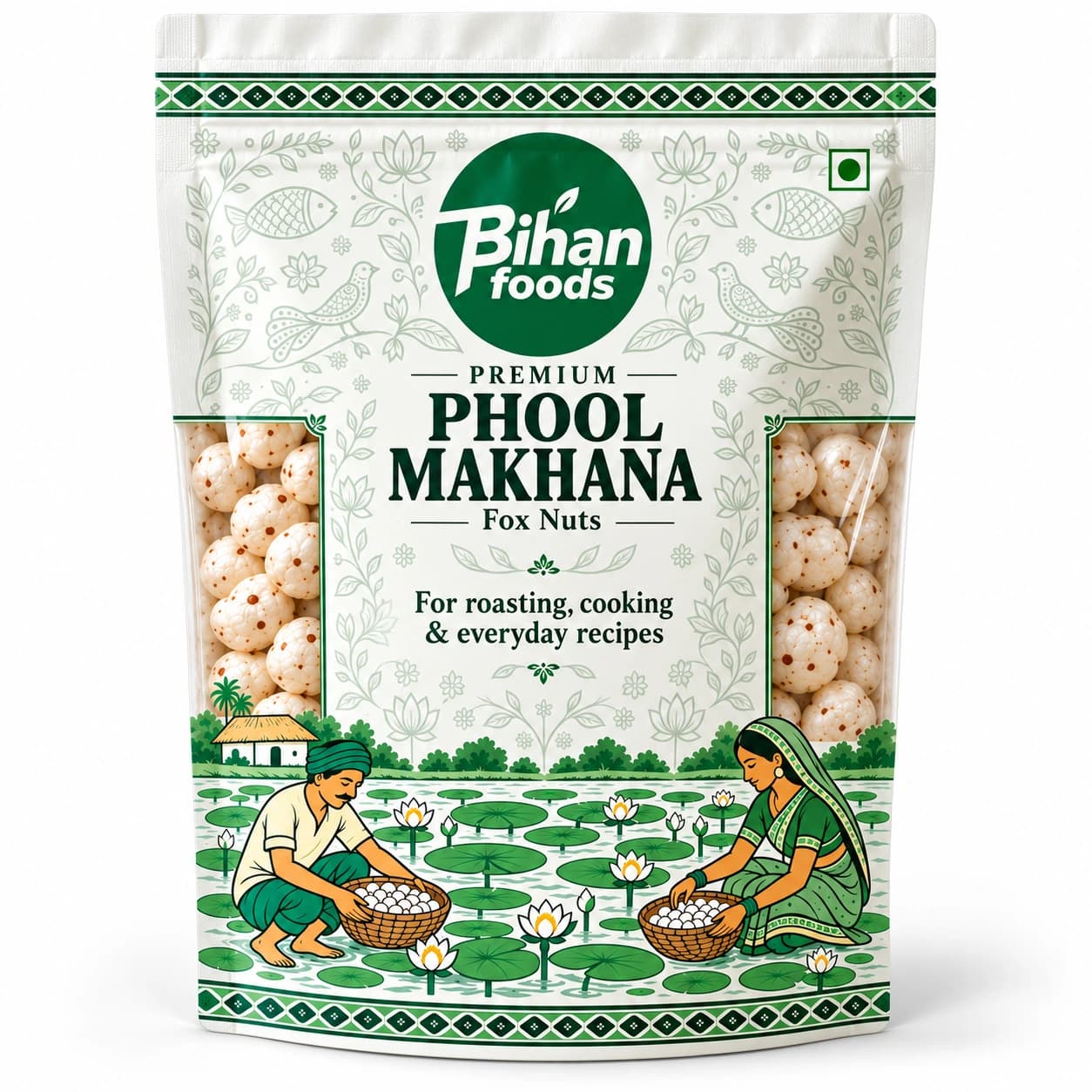
Keep one spoon for warm morning rotis or khichdi, and save another for slow-roasting makhana or tadka. Unlike refined seed oils, pure cow ghee has a high smoke point (~250°C), meaning it doesn't break down easily on an Indian stove.